Market Research on Esdiac Global- VoIP & Messaging App
Through in-depth research into the VoIP and messaging app market, we have built a clear customer, competitive, and growth strategy that can be applied across emerging markets like Mexico and South Africa.
VoIP & messaging app expansion into Mexico and South Africa.
Overview
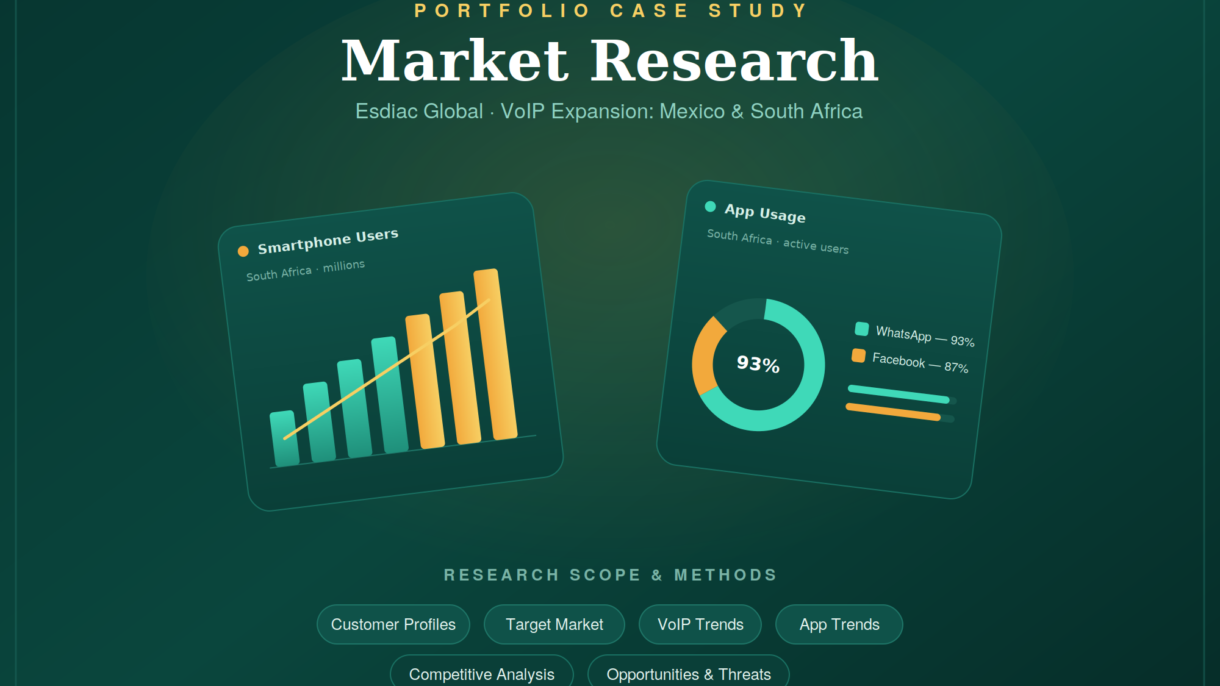
Esdiac is an internet calling and messaging app exploring expansion into two high-growth markets: Mexico and South Africa. This study profiles the customers, defines the target market, maps opportunities and threats, reviews VoIP and app trends, and benchmarks Esdiac against the leading global apps.
Customer Profiles: South Africa
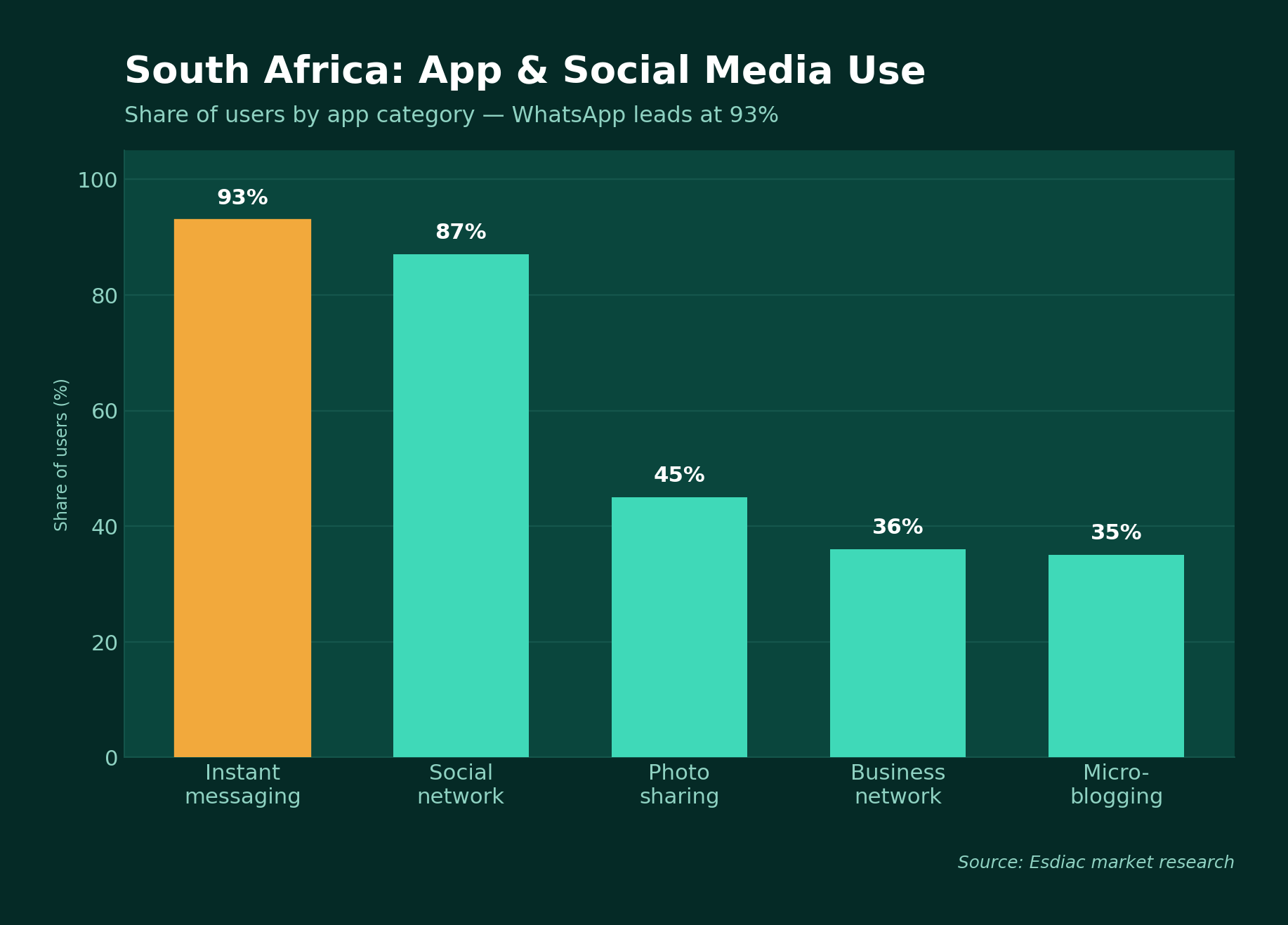
South Africa is strongly mobile-first, with phones driving 71% of web traffic. Messaging and calling are embedded in daily life, and WhatsApp dominates — used actively by nearly half the population. Users skew young (18–29), slightly more male, and better educated.
South Africa: app and social media use by category. Source: Esdiac research
Customer Profiles: Mexico
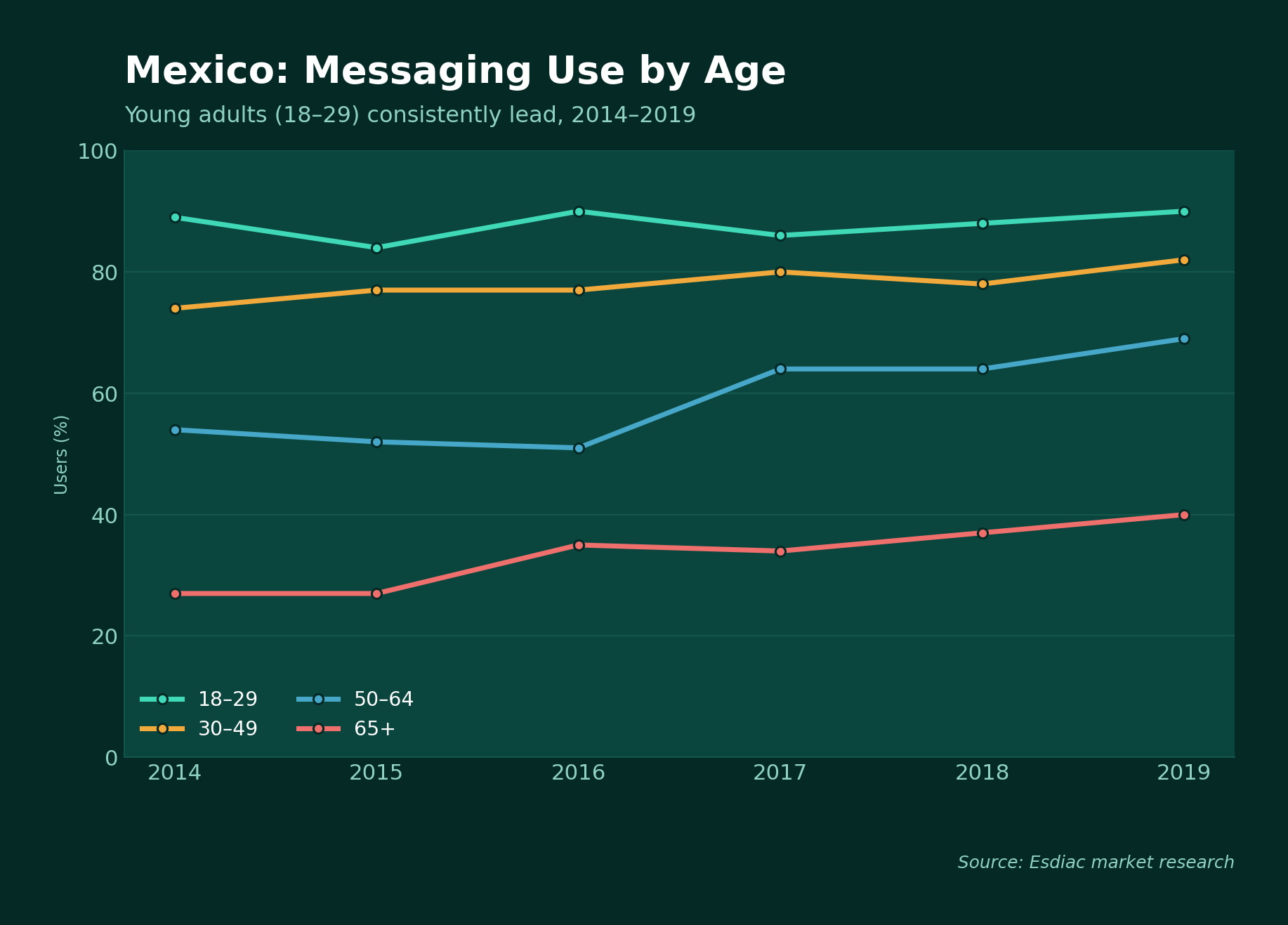
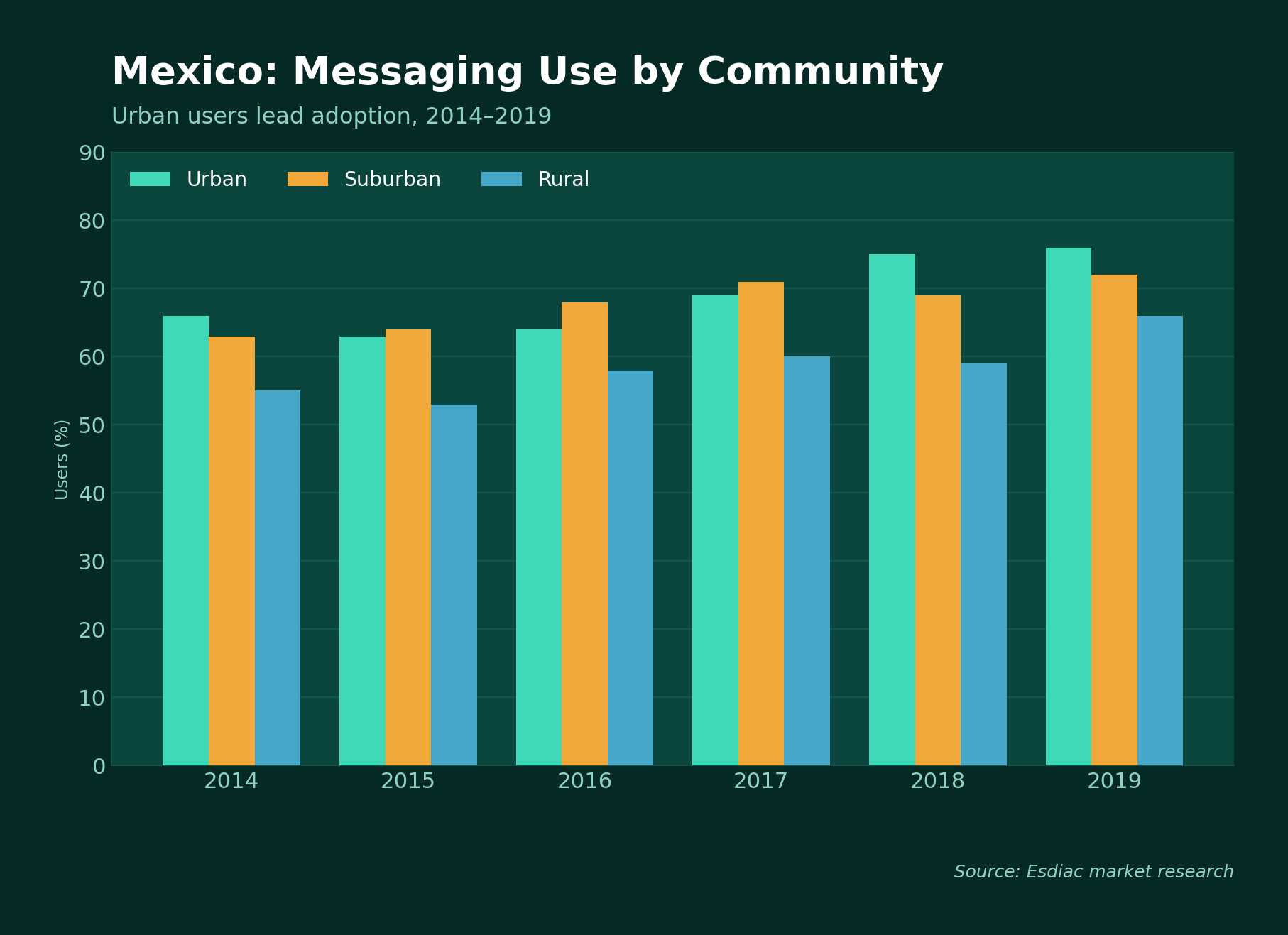
In Mexico, messaging and calling apps are used heavily — many users spend six or more hours a day on them. Notably, female users outnumber male users. Adoption is led by young adults (18–29), college graduates, and urban residents.
Mexico: messaging use by age group, 2014–2019. Source: Esdiac research
Mexico: messaging use by community, 2014–2019. Source: Esdiac research
Target Market
Age: focus on 18–29 year-olds in both markets — the heaviest users.
Gender: target female users in Mexico and male users in South Africa.
Education: prioritize college-level and above users.
Location: lead with urban populations, where adoption is highest.
Market Opportunities
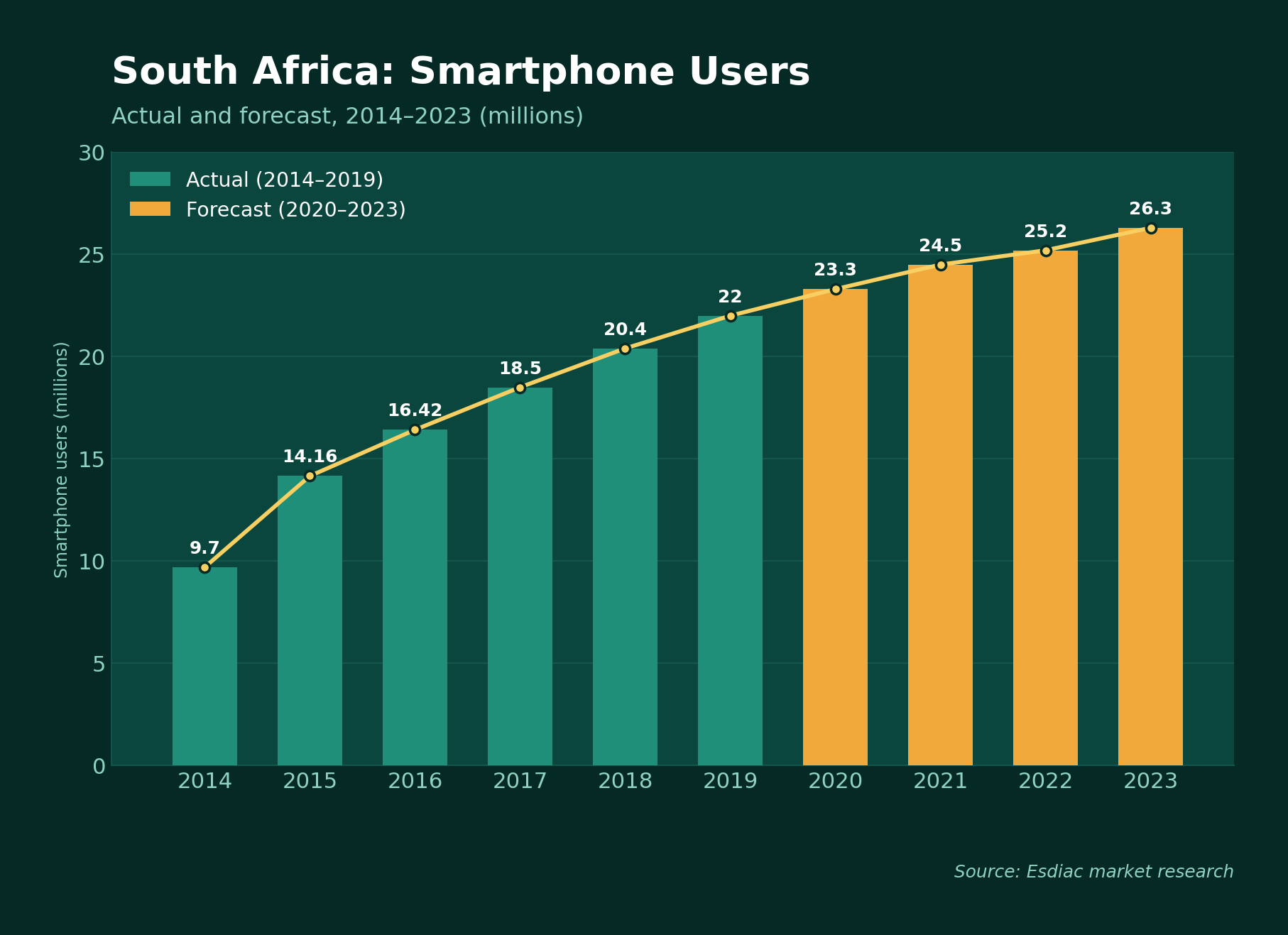
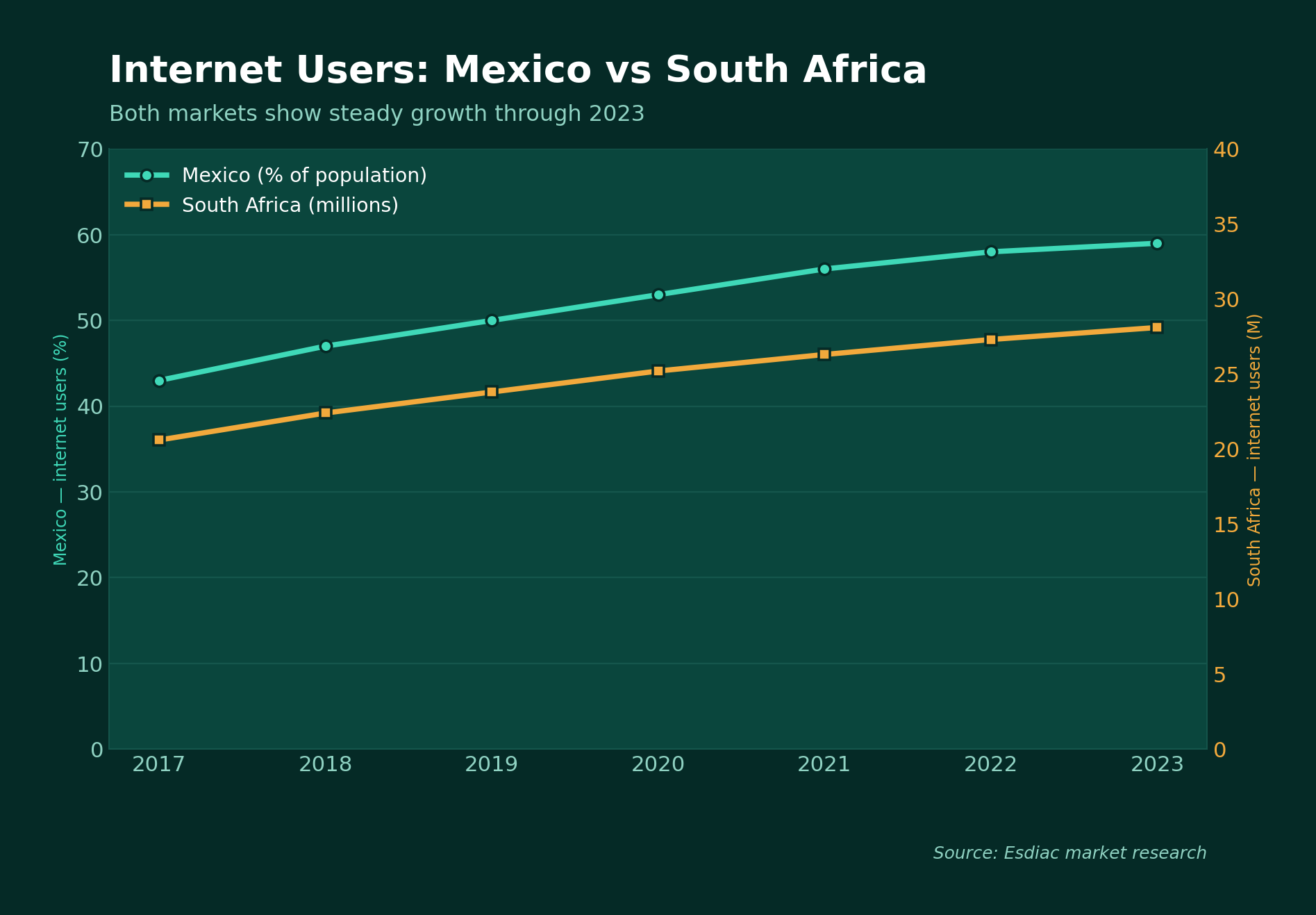
Rising smartphone and internet adoption in both countries widens Esdiac’s potential base. South Africa’s smartphone users are forecast to climb toward 26M by 2023, while internet penetration keeps rising in both markets. Remote-work culture and improved scalability add further room to grow.
South Africa: smartphone users, 2014–2023. Source: Esdiac research
Internet users: Mexico (%) vs South Africa (millions). Source: Esdiac research
Threats
Strong competition from WhatsApp, Viber, Skype, Messenger and others.
Fast-moving technology raises the cost of keeping up.
VoIP restrictions in some countries; security and privacy concerns.
Uneven IT infrastructure (esp. South Africa) and political/economic uncertainty.
VoIP & App Trends
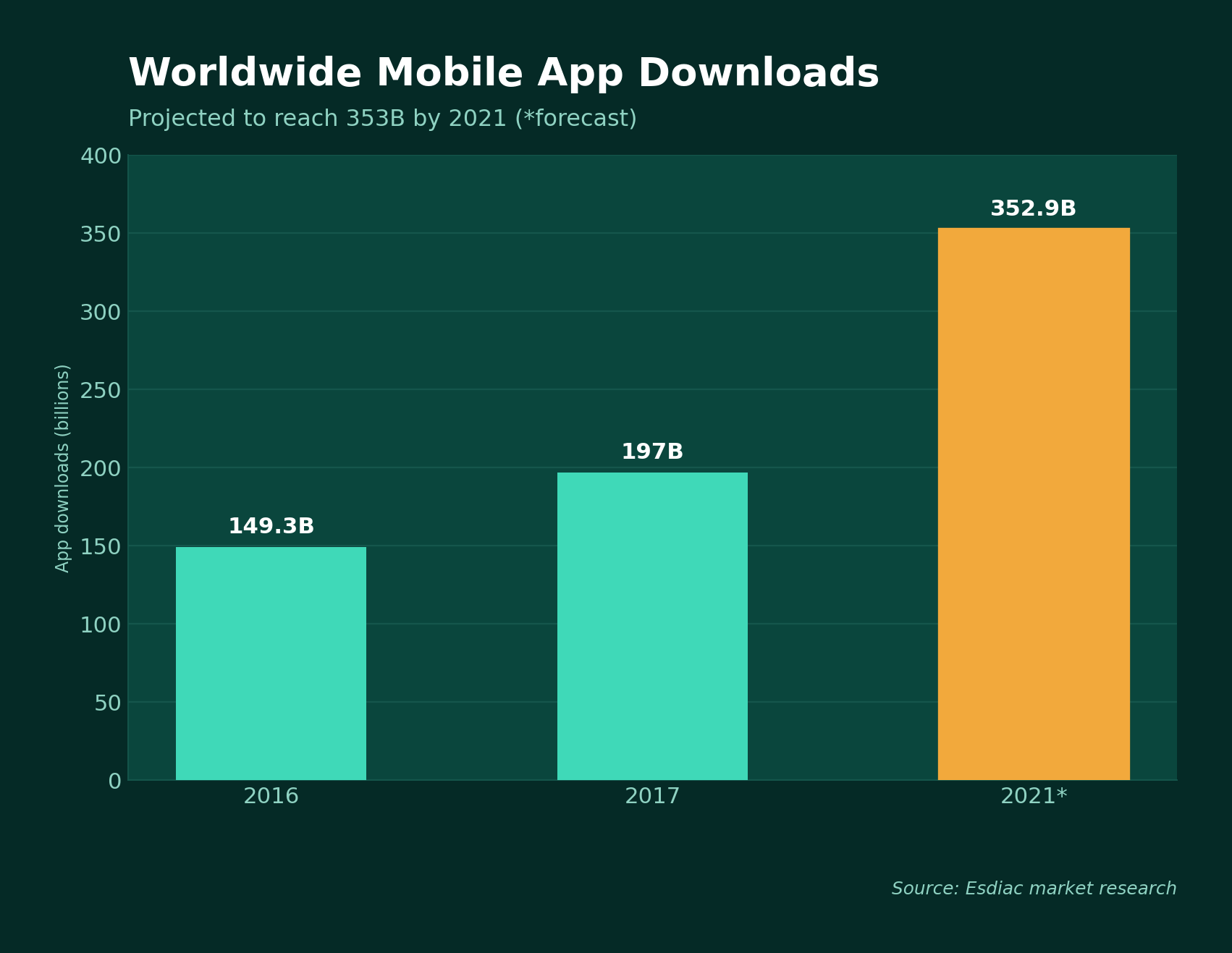
VoIP is maturing fast: in-app and unified communications are spreading, traditional landlines are fading, and 5G plus AI-driven customer service are entering the mainstream. Globally, app downloads are projected to more than double from 149B (2016) to 353B (2021), underscoring strong tailwinds for app-based calling.
Worldwide mobile app downloads (billions). Source: Esdiac research
Competitive Analysis
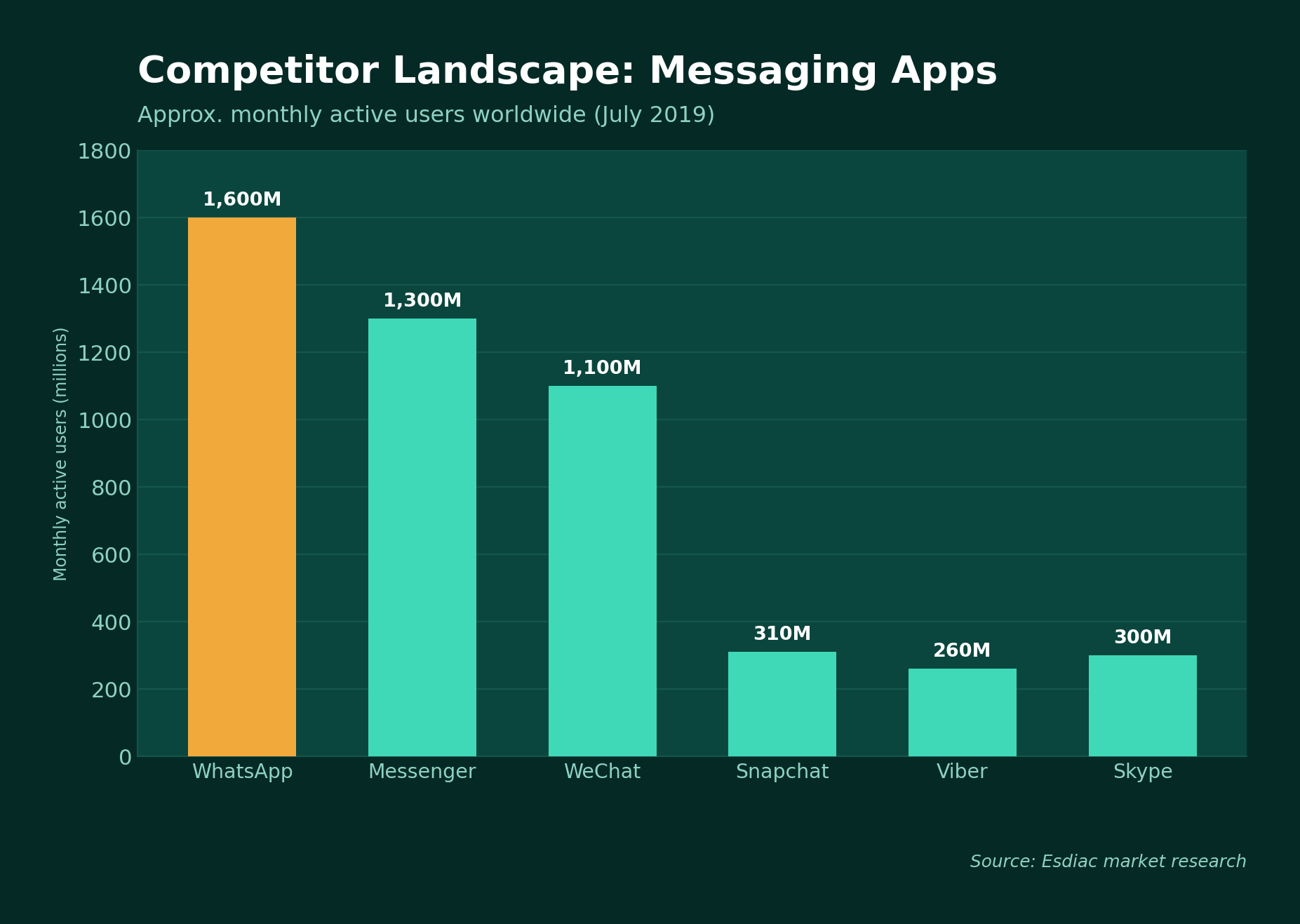
Esdiac competes with established global apps. Its differentiator is the ability to call internationally to contacts who do not have the app, at low rates. Gaps versus rivals include group chats, chatbots, desktop/tablet support, and broader feature sets offered by WhatsApp, Messenger, WeChat, Snapchat, Viber, and Skype.
Competitor landscape: approx. monthly active users (July 2019). Source: Esdiac research
Esdiac vs Competitors — Snapshot
Feature
Esdiac position
Low-cost intl calls
Strength — calls contacts even without the app
Group chats
Gap — not yet supported (rivals allow large groups)
Chatbots
Gap — no chatbot/automation features yet
Desktop / tablet
Gap — mobile only (Viber/Skype work cross-device)
Video quality
Competitive — high quality, but charged
Growth Strategy
Lead with digital channels — social media and YouTube ads — supported by a clear, well-designed website. Use sign-up promotions (e.g. free calling credit) and rely on word-of-mouth from satisfied users. Back it with reliable 24/7 support staffed by skilled, adaptable, customer-friendly people.
Conclusion
Mexico and South Africa offer strong, growing markets for Esdiac, driven by rising smartphone and internet use and young, urban, educated audiences. Success depends on sharp targeting, closing key feature gaps versus rivals, and a digital-first, word-of-mouth growth strategy.
Through a wide variety of mobile applications, we’ve developed a unique visual system and strategy that can be applied across the spectrum of available applications.
Lorem ipsum dolor sit amet, consectetur adipiscing elit, sed do eiusmod tempor incididunt ut labore et dolore magna aliqua. Quis ipsum suspendisse ultrices gravida. Risus commod viverra maecenas accumsan lacus vel facilisis. ut labore et dolore magna aliqua.
There are always some stocks, which illusively scale lofty heights in a given time period. However, the good show doesn’t last for these overblown toxic stocks as their current price is not justified by their fundamental strength.
Toxic companies are usually characterized by huge debt loads and are vulnerable to external shocks. Accurately identifying such bloated stocks and getting rid of them at the right time can protect your portfolio.
Overpricing of these toxic stocks can be attributed to either an irrational enthusiasm surrounding them or some serious fundamental drawbacks. If you own such bubble stocks for an inordinate period of time, you are bound to see a massive erosion of wealth.
However, if you can precisely spot such toxic stocks, you may gain by resorting to an investing strategy called short selling. This strategy allows one to sell a stock first and then buy it when the price falls.
While short selling excels in bear markets, it typically loses money in bull markets.
So, just like identifying stocks with growth potential, pinpointing toxic stocks and offloading them at the right time is crucial to guard one’s portfolio from big losses or make profits by short selling them. Heska Corporation HSKA, Tandem Diabetes Care, Inc. TNDM, Credit Suisse Group CS,Zalando SE ZLNDY and Las Vegas Sands LVS are a few such toxic stocks.Screening Criteria
Here is a winning strategy that will help you to identify overhyped toxic stocks:
Most recent Debt/Equity Ratio greater than the median industry average: High debt/equity ratio implies high leverage. High leverage indicates a huge level of repayment that the company has to make in connection with the debt amount.